
The International Olympic Committee (IOC) has long touted the Olympics as an event where countries come together in the name of sports and the politics that may divide them is temporarily put on hold. But geopolitics is so complex that at times just getting all the nations of the world to sit at the same table with each other usually requires a small amount of political gamesmanship just to keep everyone together. And the Olympics are no exception, often experiencing scenarios where the Olympics claims to be apolitical, but politics must be played in order to keep the Games running smoothly.
This political gamesmanship frequently appears when it comes to the names of the teams competing and who those “teams” actually are. In women’s artistic gymnastics (WAG) there have been five distinct occasions where a team had to compete under a name that didn’t truly reflect where they actually came from or who they truly were. It may sound harsh to describe these teams as “fake” rather than “unofficial” or “neutral” teams. But calling them “unofficial” isn’t the best choice of words as that invokes confusion possibly implying they competed as exhibition teams that weren’t part of the official competition. Nor is “neutral” the best choice of words either as some of these teams were anything but.
It may shock gymnastics fans to learn that this issue has appeared as many as five times in WAG history. But it may shock fans even more to learn that these teams have been a constant presence throughout WAG history with the five teams competing at the Olympics in four different decades including the 1950s, 1960s, 1990s, and 2020s. But maybe the most shocking aspect of all is that the five fake teams were incredibly competitive and finished far from the bottom of the standings where they could simply be ignored.
Two of them actually won gold medals in the Team Competition and the other three finished 4th, 5th, and 6th. All five teams either directly achieved or would have retroactively achieved (under modern-day rules) the coveted feat of advancing to Team Finals. The worst performing of these five teams still managed to beat almost two-thirds of the opposing field in the final team standings. They also racked up nine total medals in the individual events.
It should be noted that these were not mixed teams or multi-national teams where otherwise unrelated athletes are brought together. These were teams featuring athletes that had been longtime teammates, and for all intents and purposes their accomplishments should have been credited to the highly accomplished WAG program the team was initially linked to. But the circumstances of the day have them entered into the official record book as an unrelated team from an unrelated program.
The five teams in question can be humorously called “The Usual Suspects” because they all came from countries that claimed either Moscow or Berlin as their territory. It ended up being just two areas of the world that are responsible for all the quirky nationality issues existing in the results of the Team Competition in Olympic WAG. With the mentioning of East Germany, West Germany, the Soviet Union that no longer exists, and of course modern-day Russia which has had their Olympic participation come under constant sanction by the IOC thanks to Vladimir Putin’s policies, now it suddenly starts to make sense to gymnastics fans why as many as five of these teams exist.
The first of the five fake teams appeared in 1952 when a “unified” German team competed and finished 5th. But at the time East Germany had not agreed to participate with West Germany under a joint flag at the Olympics making the entire 1952 German Olympic delegation a West German delegation in all but name.

The second of the fake teams appeared in 1960 with the inverse occurring. This was another “unified” German team that attended the Olympics, but every member of its WAG lineup was from East Germany. The situation repeated itself in 1964 when “Germany” competed as a unified team at the Olympics. But once again every member of its women’s gymnastics lineup had come from the East German program. This gave women’s gymnastics its third “fake” team in Olympic history and was the only time a fake team competed in two consecutive Olympics.
In 1952 the IOC didn’t officially declare the Germans a unified team, but rather they avoided the unification issue entirely by treating them as a continuation of the same German teams that predated the outbreak of World War II. This policy was changed for 1956, 1960, and 1964 when the IOC directly confronted the situation by having the two countries compete under a modified neutral flag with the Olympic rings on it.
They were required to compete as a single country and could only field one team in any team event. Even though the East German and West German gymnastics programs competed as separate teams at the European Championships and World Championships during the 1960s, the IOC prevented them from doing the same at the Olympics.

This had disastrous consequences for the West German WAG gymnasts as East Germany had the far stronger WAG program and would take all the lineup spots for themselves. Every time the IOC announced another unified German team it was heartbreaking for the West German women as that announcement was tantamount to an Olympic ban. Their misfortune was equivalent to what so many gymnasts went through during the boycotts of 1980 and 1984. It was a heartbreaking prelude of the Cold War politics that was still to come.
As the West Germans sat at home, the East Germans led “unified” Germany to a 6th place finish in 1960 and a 4th place finish in 1964. As for 1956, the there was no German WAG lineup as these Olympics were held in Australia and many WAG programs opted not to attend due to the extreme travel requirements in a time period where it was still commonplace to travel by boat.
The West German WAG team was missing out on the Olympics not just because of an IOC policy, but a policy endorsed by their own West German government. At the time the West German position was to oppose separate Olympic teams as such an arrangement would make people more likely to associate East Germany as being a separate country. How this policy negatively impacted the Olympic prospects of their own athletes in sports like WAG were immaterial to the larger geopolitical goal.
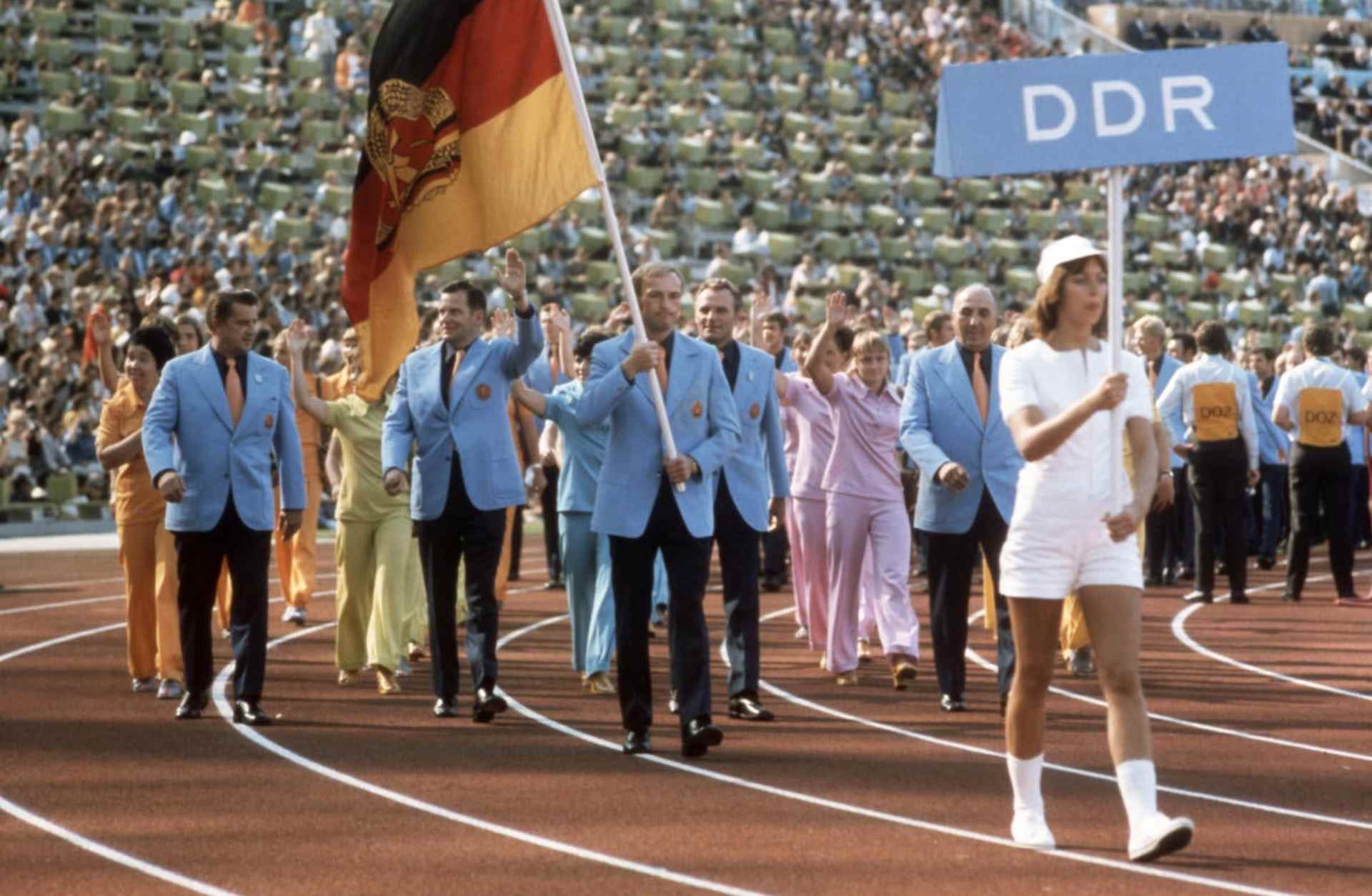
In 1966 West Germany won the bid to host the 1972 Olympics. This ramped up the pressure for the IOC and West Germany to drop their longstanding opposition to a separate East German team at the Olympics, which they did for the 1968 Games in Mexico City. In one final act of nonsensical policy, even though East Germany and West Germany were now competing as separate delegations with different country codes, they were still forced to use identical flags featuring the Olympic rings. It wouldn’t be until 1972 that the two countries would be allowed to use their own flags.
The era of Unified German teams was over. But in WAG not one of those “unified” German teams ever featured an East German or West German on the same team. The East Germans were finally allowed to compete under their own name. As for the West Germans, they finally had their first viable pathway towards Olympic participation since 1952. At Mexico City their highest scoring gymnast hadn’t even been born yet when West Germany last had a WAG appear in an Olympic Games.
East Germany and West Germany moved forward as separate programs, but the rivalry remained and became uglier with each passing decade as both countries were later linked to organized doping scandals. The original policy where East German and West German athletes had to compete directly against each other for Olympic quota spots almost certainly laid the groundwork for creating a high stakes rivalry that led to such infamous tactics.
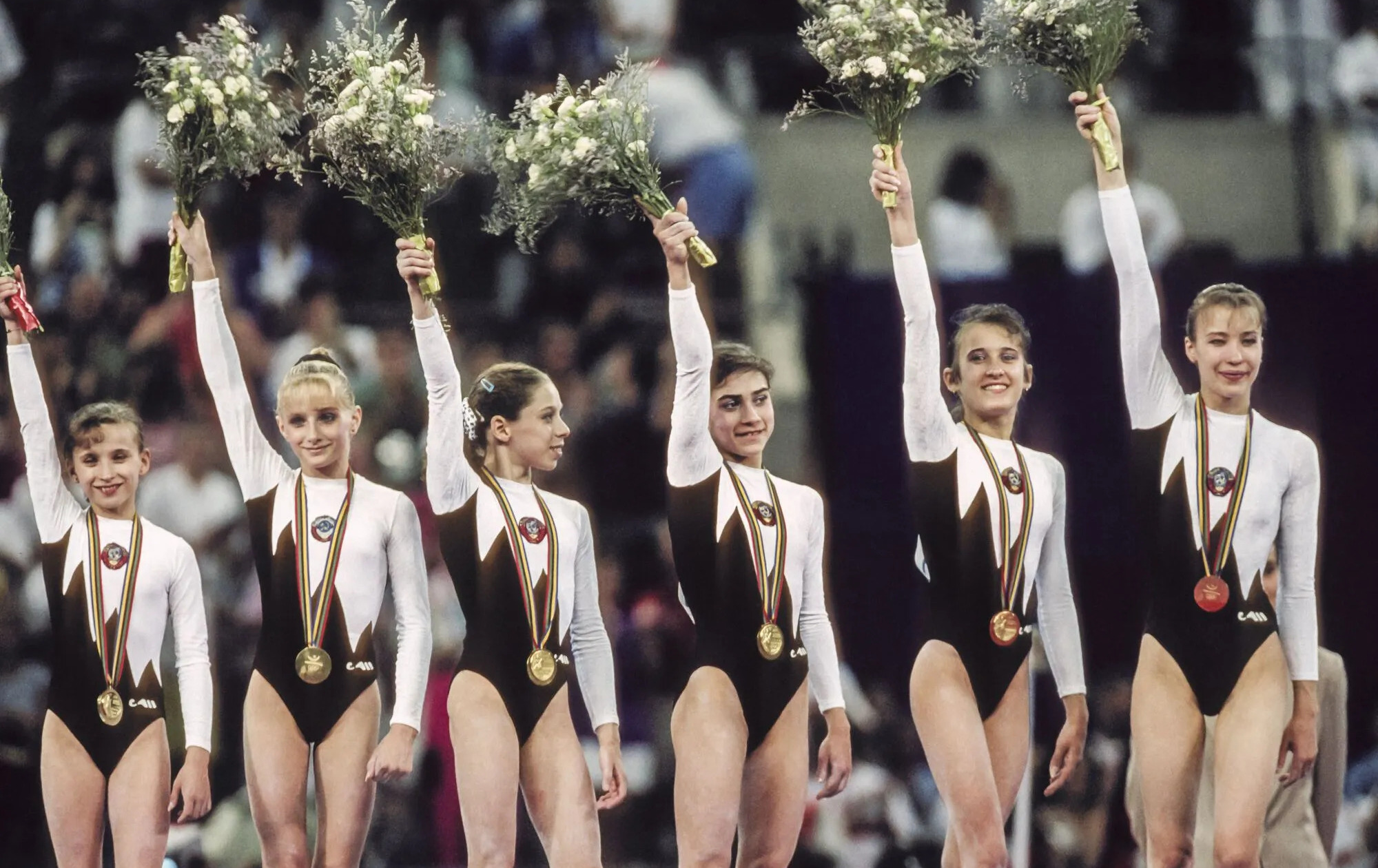
In December of 1991 the Soviet Union broke apart and 15 new nations appeared in its place. This was a nightmare scenario for the IOC as the nation that had led the medal count in both the Winter and Summer Olympics in 1988 was going to be unavailable for 1992. If that wasn’t challenging enough, the breakup was finalized only 6 weeks before the start of the Winter Olympics and only 7 months notice before the Summer Olympics. And this was occurring while 15 newly independent nations needed to be incorporated into the Olympic movement.
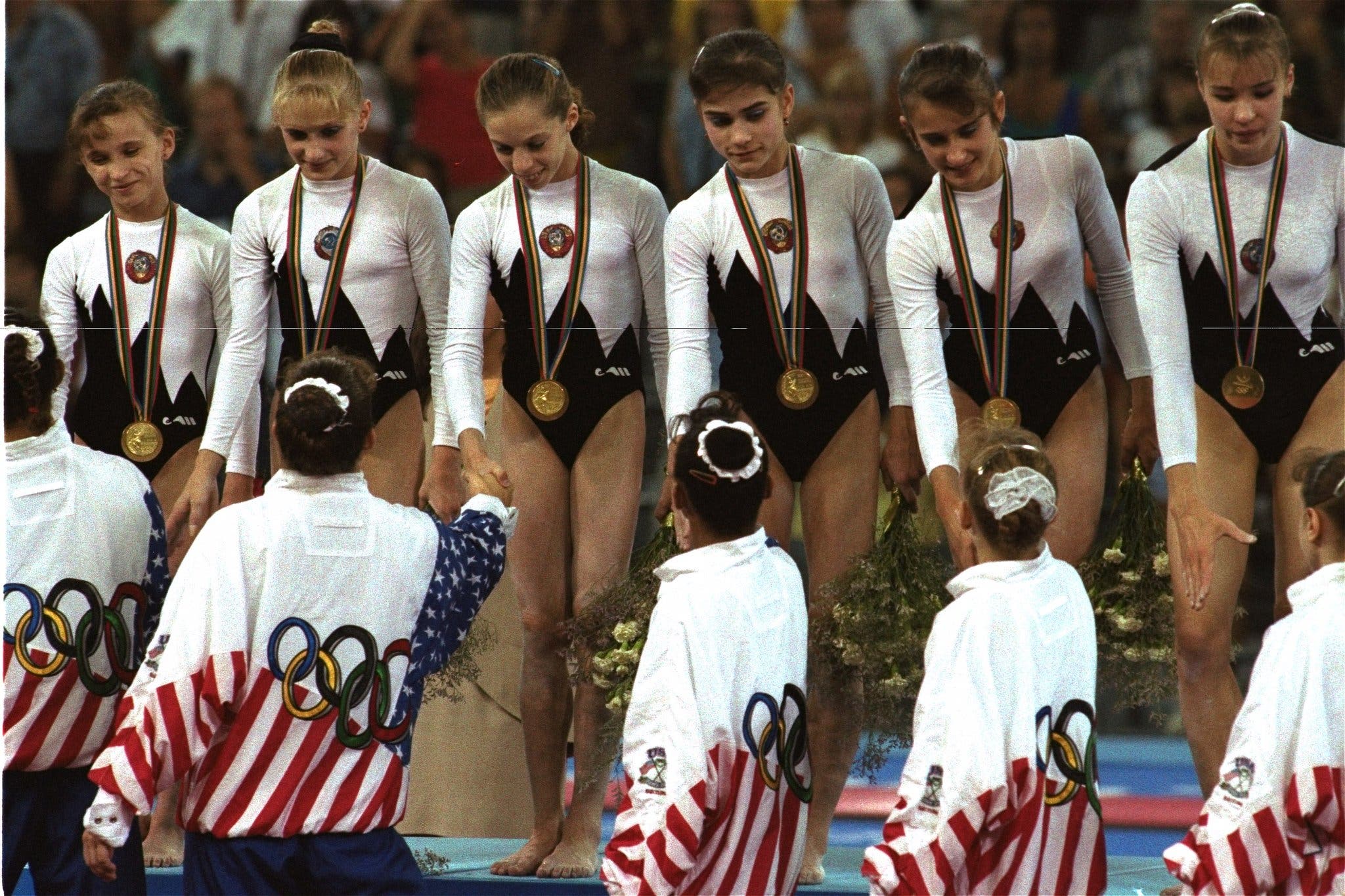
Under these circumstances it was far more sensible to keep the Soviet teams in place until the Olympic cycle was over. The Soviet Union was gone, but its sports teams would have one last go around, competing under the Olympic flag. The 1992 “Unified Team” is one of the most famous teams in WAG history, winning gold at the 1992 Olympics. It was the fourth such “fake” team in WAG history and the last to be associated with the Cold War era.
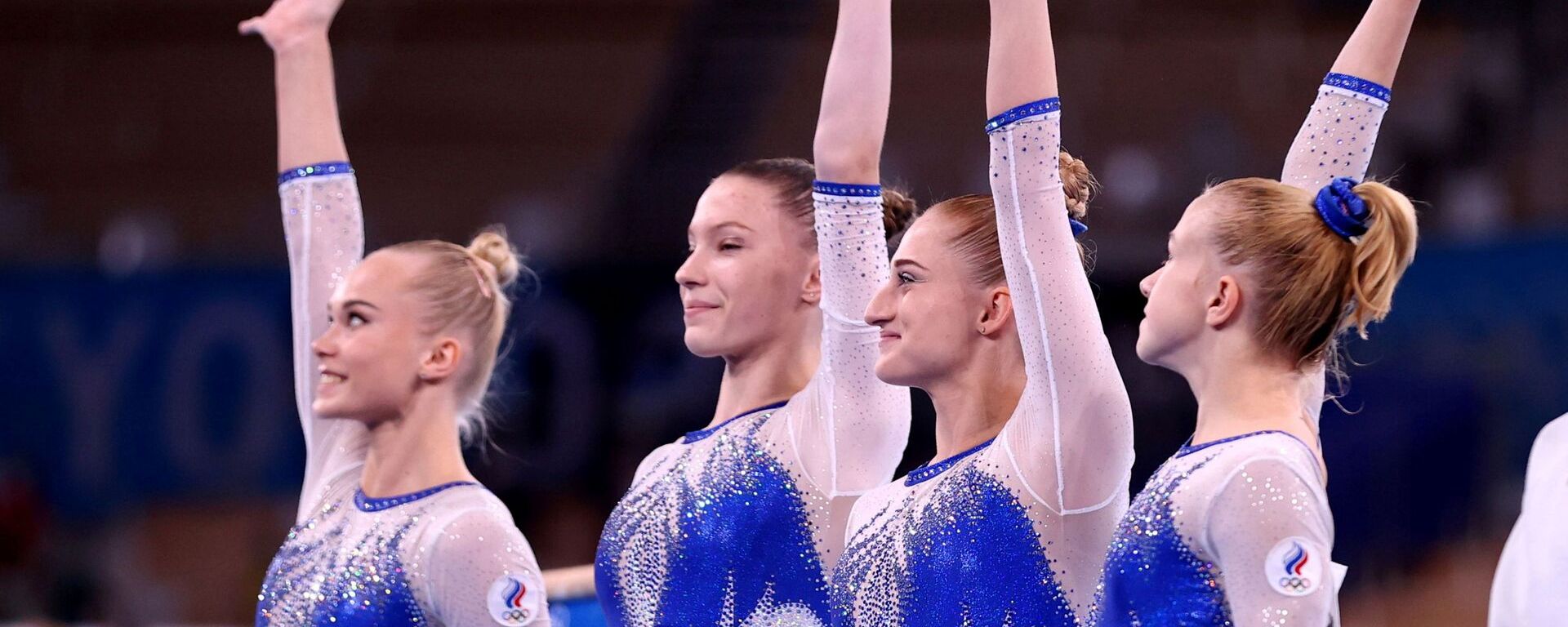
Then at the 2021 Olympics the trend returned where after being sanctioned for its involvement in state-sponsored doping, Russia was not allowed to compete under its official name. Technically this was a team competing as neutrals under the Olympic flag. But the IOC granted Russia significant leeway allowing them to use the name “Russian Olympic Committee” while also being able to wear the same colors that matched their national flag. The team went on to win gold in the team competition at the 2021 Olympics. But the bizarre nature of a team wearing Russian colors, competing as the Russian Olympic Committee, but according to the IOC wasn’t actually “Russia” made them the fifth example of a “fake” team.

With future plans to expand the TMC Data Hub to include team results, the purpose of this article it to enter the realm of messy nationality issues and explain how the TMC data will approach this issue. TMC will credit these “fake” teams as belonging to the same “real” teams they were officially separated from in the IOC/FIG record book for all TMC website data.
This is being done partially because it is my belief that it is completely nonsensical, opposed to truth, along with disregarding common sense to pretend an all-East Germany lineup has no links to East Germany, or an all-Russian lineup has no links to the Russian Federation. But this is mostly being done because it is easy to codify a set of criteria to determine what qualifies as a fake team. These five teams were able to meet the following three requirements.
1) The team in question evolved out of a single gymnastics program, where all the gymnasts were of the same background, with their own unique program history and were originally organized as a national team.
2) The team did not use the flag, symbols, and naming conventions of the country the gymnasts were originally linked to or currently associated with.
3) The team was able to serve as a continuation of the program they originally belonged to and was the only such team with legitimate links to the program that was unable to compete.
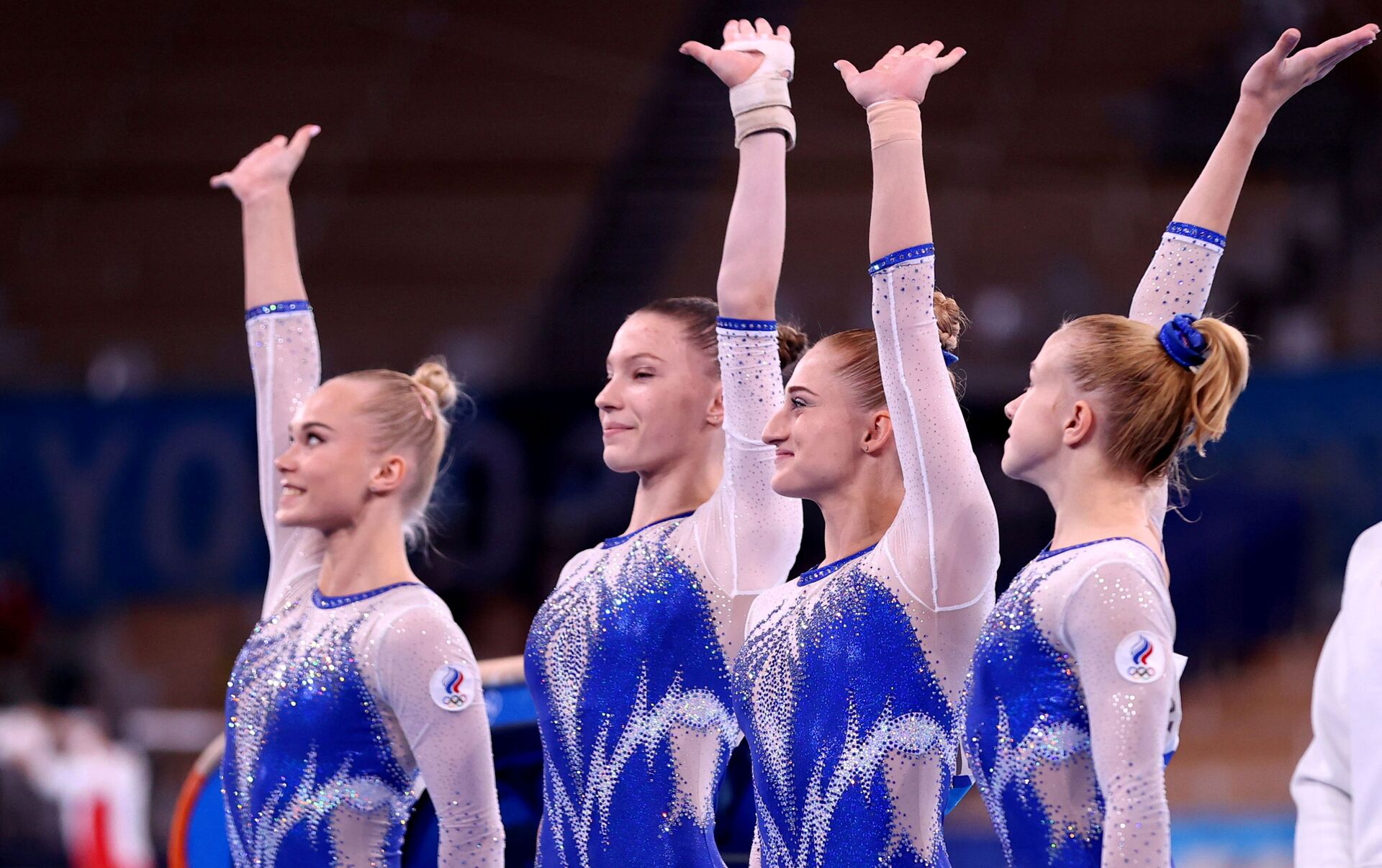
At a time when Russian athletes are competing under OAR, ROC, ANA, RGF, and AIN, there is a reasonable chance that another Russian Olympic team will compete under questionable naming semantics in the future. Adding a 6th example of fake teams competing in Olympic WAG.
It is also possible that one day it will pop up in regards to Taiwan which is not allowed to compete as “Taiwan” but for political reasons uses “Chinese Taipei” instead. They also use a modified flag featuring the Olympic rings. Currently, Taiwan does not score high enough to qualify a full team to the Olympics. But if their WAG program ever grows powerful enough to send a full team to the Olympics, they could be yet another example of a team competing under a name and flag that doesn’t tell the full story of who they actually are.
With two current examples of programs competing in organized international competition while simultaneously having such rigid restrictions on what names they can be called or what flag they can be associated with, the era of these types of teams competing at the Olympics is far from over. Their existence has long been a feature of the Olympic movement and it is doubtful that the next team to do it will be the last of its kind.
Note: Below is a full roster breakdown of the five fake teams.
| Team name | Era | Team members |
|---|---|---|
| Official Name Germany (GER) Unofficial Name West Germany (FRG) | 1952 Olympics | -Irma Walther -Hanna Grages -Elisabeth Ostermeyer -Wolfgard Voss -Inge Sedlmaier -Lydia Zeitlhofer -Brigitte Kiesler -Hilde Koop |
| Official Name United Team of Germany (EUA) Unofficial Name East Germany (GDR) | 1960 Olympics | -Ingrid Fost -Roselore Sonntag -Ute Starke -Gretel Schiener -Renate Schneider -Karin Boldemann |
| Official Name United Team of Germany (EUA) Unofficial Name East Germany (GDR) | 1964 Olympics | -Ingrid Fost -Ute Starke -Birgit Radochla -Karin Mannewitz -Christel Felgner -Barbara Stolz |
| Official Name Unified Team (EUN) Unofficial Name Soviet Union (URS) | 1992 Olympics | -Svetlana Boginskaya -Tatiana Lysenko -Roza Galieva -Tatiana Gutsu -Elena Grudneva -Oksana Chusovitina |
| Official Name Russian Olympic Committee (ROC) Unofficial Name Russia (RUS) | 2021 Olympics | -Angelina Melnikova -Lilia Akhaimova -Viktoria Listunova -Vladislava Urazova -Anastasia Ilyankova -Elena Gerasimova |
 An Old School Gymnastics Blog
Outstanding article, thanks !
LikeLike
Very interesting!
LikeLike